Link
to Home Page  |
||
| October 2025 |  |
Chess960 (AKA: Fischer Random Chess and
Freestyle Chess)
|
| September 2024 | |
Backgammon gets stronger
|
| March 2023 | |
Chess moves on
|
| December 2022 | |
AI Factory in Nepal!
|
| October 2021 | |
All new Backgammon!
|
| September 2021 | |
A strange year!
|
| December 2020 | |
The Queen's Gambit
|
| September 2020 | |
Spades update
|
| June 2020 | |
Facebook hack
|
| April 2020 | |
Chess multiplayer update
|
| August 2019 | |
Chess with 3D graphics
|
| January 2019 | |
Chess gets a friendly facelift
|
| December 2018 | |
The new look icons
|
| October 2018 | |
Spades AI moves on
|
| December 2017 | |
142,000,000 Android downloads
|
| November 2017 | |
Checkers goes on-line
|
| October 2017 | |
Publication moves to public domain
|
| June 2017 | |
Game AI Pro 3: Collected Wisdom of Game AI Professionals published
|
| May 2017 | |
Spades app gets a voice
|
| December 2016 | |
The numbers continue to roll! 122,000,000 downloads
|
| November 2016 | |
Chess book update
|
| May 2016 | |
Go Free goes East
|
| March 2016 | |
Go Free
|
| September 2015 | |
Gomoku launch
|
| August 2015 | |
The Knight Train
|
| July 2015 | |
Tic Tac Toe Universe launch
|
| May 2015 | |
The Numbers Roll Over...100,000,000 downloads!
|
| April 2015 | |
Euchre Free: Our latest card game
|
| July 2014 | |
Chess Free in Film Short!
|
| June 2014 | |
Chess Free re-vamp
|
| March 2014 | |
Chess Free Tutor
|
| December 2013 | |
Christmas 2013
|
| May 2013 | |
Solitaire Android launch
|
| February 2013 | |
AI Factory tops 50 million Android downloads
|
| August 2012 | |
AI Factory tops 40 million Android downloads
|
| June 2012 | |
Gin Rummy Free and Antix
|
| May 2012 | |
Chess Free tops 10 million
|
| November 2011 | |
Sticky Blocks™ release on iOS
|
| September 2011 | |
Hearts Android launch
|
| July 2011 | |
Spades Android launch
|
| May 2011 | |
AI Factory Android hits 5,000,000 downloads
|
| March 2011 | |
AI Factory Android hits 3,000,000 downloads
|
| February 2011 | |
AI Factory poker engine in Microsoft Full House Poker
|
| January 2011 | |
AI Factory Android hits 1,500,000 downloads
|
| November 2010 | |
Android apps in South Korea
|
| September 2010 | |
Chess Android launch
|
| August 2010 | |
Backgammon Android launch
|
| June 2010 | |
Move it!™ puzzle launch
|
| May 2010 | |
Lecture at Tokyo University of Technology
|
| January 2010 | |
Touchscreen Aquarium
|
| December 2009 | |
Tokyo University of Technology
|
| August 2009 | |
In-flight entertainment Shogi
|
| April 2009 | |
Poker engine development
|
| February 2009 | |
Aya Go on iPhone
|
| January 2009 | |
Chess release in Japan
|
| December 2008 | |
Happy Christmas
|
| November 2008 | |
Seawater Aquarium PC release in Japan
|
| October 2008 | |
Billiards release in Japan
|
| August 2008 | |
Shotest Shogi released on XBLA in Japan
|
| July 2008 | |
New Pool / Snooker including dynamic tutorial
|
| June 2008 | |
Shotest Shogi 3D
|
| May 2008 | |
18th World Computer Shogi Championship
|
| March 2008 | |
3D Shogi for PC and Shotest Shogi for Xbox360
|
| February 2008 | |
GDC 2008 conference
|
| January 2008 | |
PC Aquarium
|
| December 2007 | |
Merry Christmas
|
| October 2007 | |
3D Shogi
|
| September 2007 | |
Mobile Aquarium
|
| August 2007 | |
Our Chess on MSN
|
| July 2007 | |
In-flight entertainment Bridge
|
| June 2007 | |
Aya Go engine
|
| May 2007 | |
17th World Computer Shogi Championship
|
| April 2007 | |
Most popular engines
|
| December 2006 | |
Happy Christmas!
|
| November 2006 | |
Shogi
|
| August 2006 | |
Omar Sharif Bridge
|
| July 2006 | |
Game Developer's Conference
|
| May 2006 | |
16th World Computer Shogi Championship
|
| April 2006 | |
Microsoft
|
| February 2006 | |
AI Factory and Selectsoft
|
| December 2005 | |
Merry Christmas!
|
| October 2005 | |
Classic Compendium 2 launch
|
| August 2005 | |
GDCE, IGDA and GME
|
| July 2005 | |
Classic Compendium launch
|
| June 2005 | |
E3
|
| May 2005 | |
15th World Computer Shogi Championship
|
| April 2005 | |
Gizmondo compendium
|
| February 2005 | |
3D Chinese Chess
|
| January 2005 | |
Pool for Unbalance in Japan
|
| December 2004 | |
Christmas wishes
|
| October 2004 | |
AI Factory and Buruxo's Spell Mage
|
| September 2004 | |
Treebeard Chess in Japan
|
| July 2004 | |
AI Factory and Revolution Software
|
| June 2004 | |
AI Factory in Japan
|
| May 2004 | |
3D Chess and 3D Bridge products released
|
| April 2004 | |
On-line shop selling Classic range
|
| March 2004 | |
Go (Wei-chi) for South Korea
|
| February 2004 | |
New Treebeard Chess engine
|
| December 2003 | |
AI Factory and XBOX
|
| November 2003 | |
3D Chess and 3D Bridge demos
|
| September 2003 | |
Omar Sharif signs for AI Factory
|
| August 2003 | |
3D Pool and 3D Darts products released
|
| June 2003 | |
Rock band Meretto sign to AI Factory
|
| April 2003 | |
First AI Factory contract to Global Star
|
| March 2003 | |
Company formed
|
 |
|
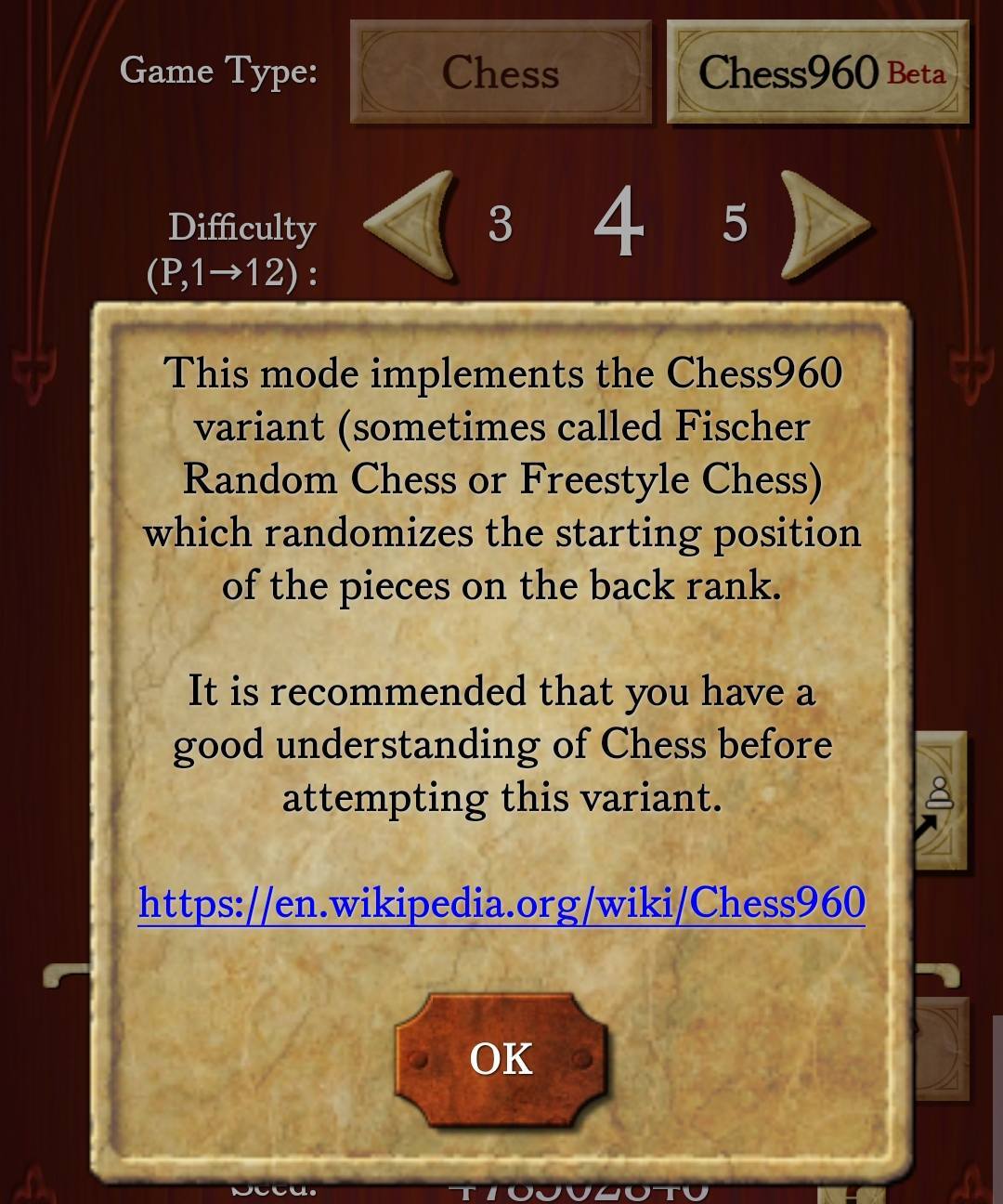
Given the massively increased popularity of Chess960 (AKA: Fischer Random Chess and Freestyle Chess), we have upgraded our chess program to support this. This game attracts big prize money, second only to Chess, and is popular with the top Chess players, including Magnus Carlsen. It re-invigorates chess, offering 960 possible randomised start positions and avoids the dependence on chess book knowledge. |
 |
|
|
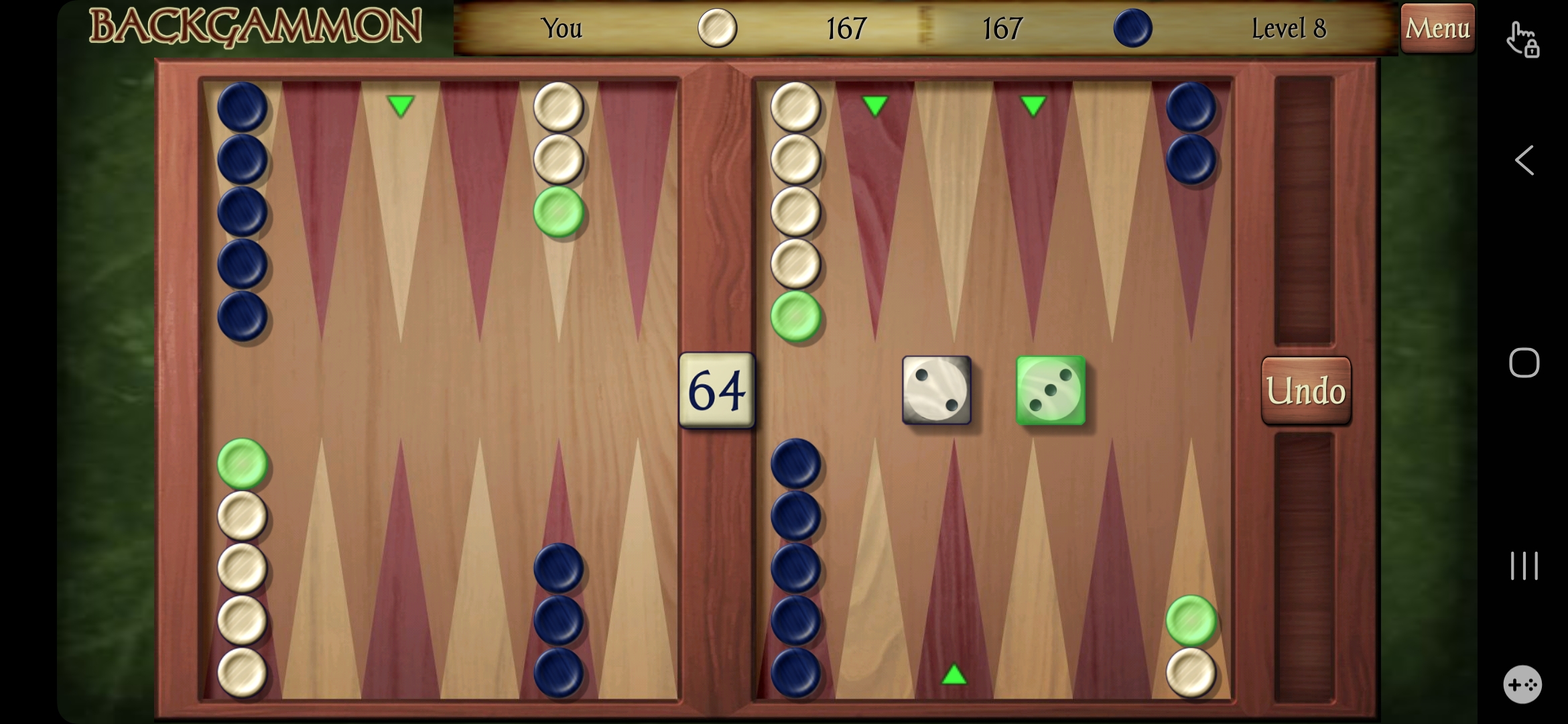
Backgammon has been through a significant re-vamp, adding a new top level 8, which appears to have pegged our product as the strongest on Google Play. This engine employed self-play learning to improve it, often run on 50 CPU cores to do this. It also uses an intelligent lookahead to predict when to double. Lastly we provided all the needed tools for players to prove that it really was strong and was not cheating! |
 |
|
Our chess program still holds a commanding position in the app store with over 100m downloads. However, even after some 13 years in charts, there are always ways to improve it. The existing product optionally marked endangered pieces but did not prevent me from moving a piece needed to defend another piece or ensure that it occupied a safe square. We have implemented two optional levels of safety checks for piece movement. Level 1 checks whether a piece can safely enter a square, while Level 2 checks whether moving the piece may cause a loss on another part of the board. This update provides a “safe” casual mode of play and serves as a valuable teaching tool. |
 |
|
|
AI Factory participated in an Everest expedition and contributed substantial sponsor funds towards building a Vocational Centre in Nepal where young people can learn trades such as carpentry, plumbing, electrics, tailoring, fabrication and welding before returning to their home villages to start businesses. This is a worthwhile use of AI Factory’s increasing capacity for agency in the world. James Barnet here shows our modest presence at base camp! |
 |
|
Our Backgammon Pro has been top of the charts for a long time but it needed a new game engine. Both this and the free product now have 2 games engines, leaving levels 1-5 using the old engine and levels 6 and 7 the new much stronger game engine. We could have swapped out the old game engine, but users still like the old version! So it is better to add rather than both add and take away facilities. |
 |
|
|
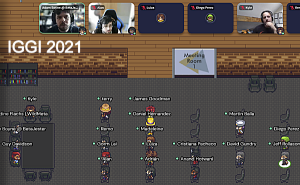
A strange year! We have products to be released, but the pandemic has stripped out much activity. The likes of GDC San Francisco have fallen out of the calendar. However conferences are morphing and the one we just attended on-line was pretty close to being as good as a live conference, using the very capable gather.town software. You could wander around and even eavesdrop conversations and seamlessly join, if desired. The world finds new ways to adapt to adversity! |
 |
|
|
Most of our history is in our own hands, but from time-to-time an external seismic event dictates our progress. No, not the pandemic but Netflix's release of "The Queen's Gambit" which has received over 62m views and has boosted the interest in chess worldwide. We have been swept up in this and have have gone the extra mile to provide an update to our product to engage the new enthusiasm for chess. A key hook in this series has been its focus on particular openings, and we have expanded our app so that the player can track what opening they are in. The program holds over 700 named opening lines and even tracks the final game in the series. |
 |
|
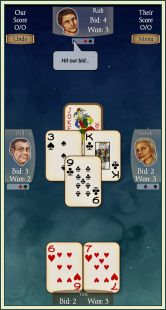
Our heads have been down for a long time dealing with many issues, exacerbated by the pandemic. However progress has continued, but at a slower pace. Our most recent release has been the latest update to Spades Free. This is an important app for us and has consumed the vast majority of our AI work over the last 5 years. The most significant gains were from a radically new bidding system. This new release is the cumulation of much work on Nil play, particularly double Nil. Nil play is the most challenging part of Spades AI. It's looking good. |
 |
|
|
Unfortunately our Facebook page for Chess was hacked by Cambodian hackers and sadly we have been unable to regain control of it, so apologies to our 73 thousand followers. We have a new protected page. A component in our failure to recover stems from the pandemic where Facebook do not have the bandwidth to help users suffering from such hacks. |
 |
|
|
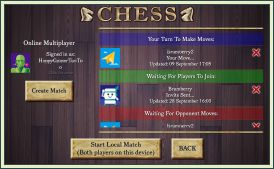
Will the withdrawal of Google Play Games support for multi-player we have had to quickly replace this using Firebase. Initially this seemed a total pain but the plus side is that the new system is much faster and flexible, allowing adding of features not possible with the old system. This will eventually allow addition of proper chess clocks. User feedback has been very positive. |
 |
|
|
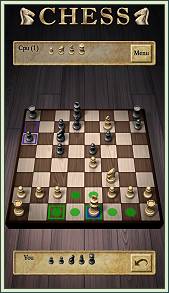
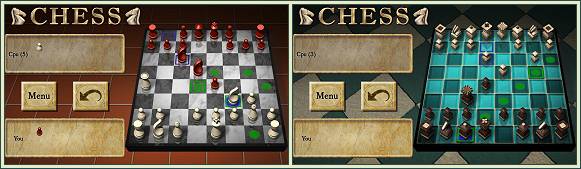
Over the years we have had a great many requests for 3D graphics. In an effort to keep the apk as small as possible, and concerned how practical these graphics might be to play an actual game on small devices, we postponed implementing it. But apps and screens have both grown in size over the years, so we decided the time was right to look again. We have just added 4 new boards and 7 new piecesets in a 3D view. We have also added a choice of 4 backgrounds for 3D and, for the first time, 2D. To allow players greater flexibility, we have also extended landscape support from tablets to include almost all devices. We are glad to say that the response from our playing community has been very positive! |
 |
|
 |
|
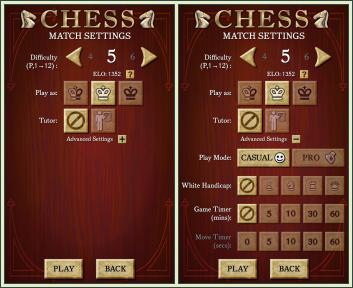
Our Chess app was designed to make sure that most people had all the things they wanted. Over a period we added more and more. However it seems that some of our newer and newbie users were a tad overwhelmed by so many options. Most chess products provided few and therefore seemed more friendly. To address this we re-designed options so that the default was less intimidating, but with still an option to access all advanced options. This brought our chess more firmly into the "friendly chess" fold that many users wanted. We also added inducements that made suggestions to the player in response to their progress. |
 |
|
|
Android persists in "moving on". we started on Android 2.0 and now we are at 9.0. With this has come changed and enhanced presentation of game icons. The old icons were still supported, but buried inside a generic rounded square. After much hand wringing we decided on how we would look in the new icon format and in doing so we needed to change the look of our brand. This can be disruptive and weaken our brand, but actually we like the new look forced on the move to Android 9. |
 |
|
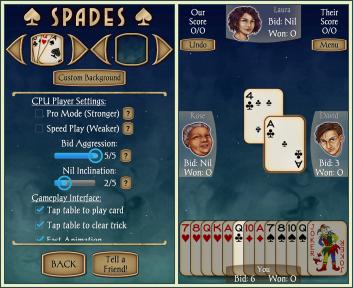
Our Spades app is now quite old, but still consumes 90% of our AI effort over the last 5 years. The area that needed the most attention was Nil play, particularly where two players go Nil. This poses many conflicting goals so has needed much more coding attention. From our analytics we can see that the app win rate against human play continues to improve with new updates, but we still have further to go. |
 |
|
|
AI Factory Google Play apps topped 142,000,000 downloads in December. We have come a long way since May 2011 when we annouced 5,000,000. Of course the market overall has hugely grown and increasingly we are a smaller fraction of all apps out there, but with 142 million downloads, there are still a lot of people using our apps! Our biggest star among this is our Chess Free, which has topped 70 million. We still need to earn the loyalty shown for our apps so we continue to work very hard to listen to our users and make our products better and closer to what the users want. |
 |
|
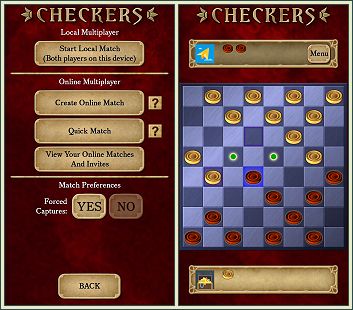
AI Factory Android apps cover a wide range of functionalities, but these have all been geared to single user play, or shared play on the same device. Netplay has been on our radar for years and finally we have bitten the bullet and released this for our Checkers app. Of course netplay offers the opportunity for more ways for the app to not do what the user wants, so Checkers has been a helpful testbed before moving on to our bigger apps! The feedback has been good and the added facility well-received! |
 |
|
|
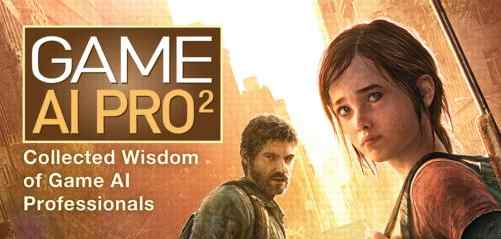
AI Factory publishes its own periodical twice a year, but also publishes externally. One such publication from 2015 has now moved to the public domain: "Interest Search – A Faster Way to Do Minimax:"- Hardback Game AI pro 2 : Collected wisdom of game ai professionals". CRC Press ISBN: 978-1-4822-5479-2. This describes in detail our bespoke search method which proved highly successful on our Shogi app and is core to our Chess program. You can now download this excellent book for free using the link above |
 |
|
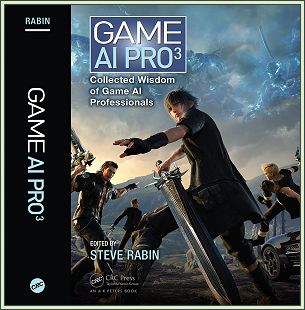
AI Factory is gradually sharing its development knowledge via the AI Factory Quarterly/Biannual Periodical, but recently also published a chapter in Steve Rabin's Game AI Pro 3: Collected Wisdom of Game AI Professionals, following on from our previous contribution to Game AI Pro 2: Collected Wisdom of Game AI Professionals.
The AI Factory Periodical not only shares our knowledge and experiences but is also helpful for us to dissect and present development issues we have had. This forces us to analyse and understand these, and as a consequence have a better comprehension of what we learned to feed back into our follow-on development. Writing it all down for others to read helps us! |
 |
|
|
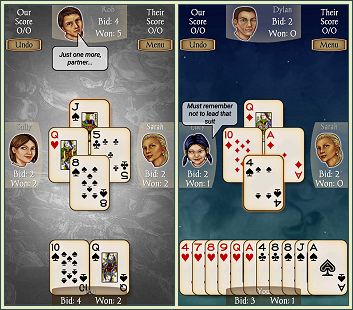
Our Spades app had received most of our work this year and now characters have speech bubbles to comment on the game situation and engage in chatter. They also smile or frown in response to the game situation. This brings the AI opponents to life, rather than present a mostly static face that does not respond to the game. In addition much new work has been completed on the AI, resulting in a play strength substantially above the level we had at the start of the year. Spades is a very popular app among our users and we have much enthusiastic input and more beta testers than for any other game, so our commitment to this app is very strong! |
 |
|
|
With 122 million downloads, AI Factory continues to make headway in what is becoming a very competitive market on Google Play. The number of games played is staggering. Our chess alone clocks up over a million games played per day. Of course all this attention also obliges us to satisfy our user's requirements, so much effort is expended in making our apps do exactly what our users want. There are not many of us, but very many of them! We are very grateful for all the input we have received from all our users. |
| |
|
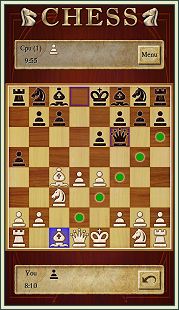
The old chess opening book in our Chess/Chess Free was a legacy book from the first release version back in 2010, designed to run on mobiles with tiny memories, such as the Google G1. Clearly the mobile technology has moved on a long way and compromises we made early on are no longer needed. It now has a 2 meg book, 700x times bigger than the tiny book previously provided. However it needed some special crafting as players do not just want to play in the style of modern grandmasters but also to be able to follow some unfashionable or simpler or even slightly unsound lines. The solution was to mix the book with an extra hand-crafted book, structured like the old small book, and have this hand-crafted book steer the choice of openings. From this we have a book that works well with the amateur player, but still has the depth desired by more professional players. |
 |
|
|
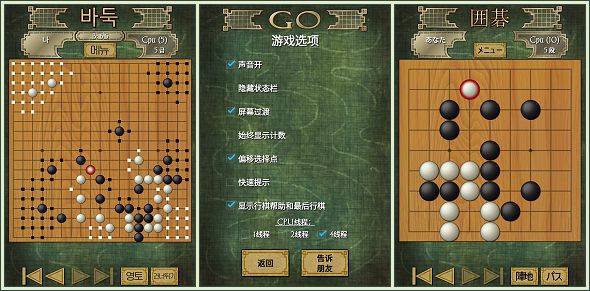
Taking advantage of the new helpful embedded links through to translation services provided by the Google Play console, we have relaunched our first product with Japanese, Korean and Simple Chinese translation. Our Go Free has its prime popularity in the east and now we provide a properly supported product for these territories. Our paid Go product was #1 in the paid board game chart for 30 days in succession and, as of publishing end of May, was still #1.
|
 |
|
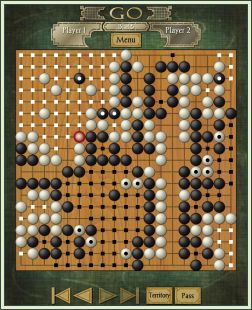
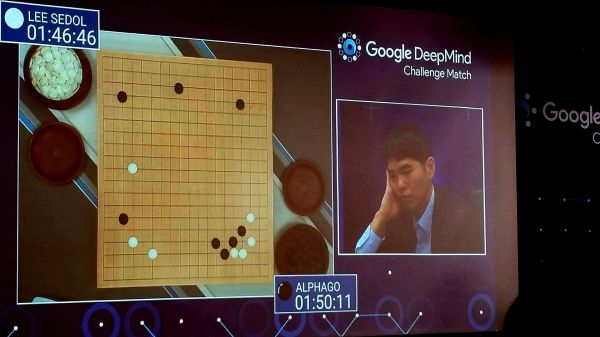
In parallel to the lead-up to the famous AlphaGo vs Lee Se-dol match, we were beavering away at completing a massive upgrade to our Android Go product. This replaced the old AI with the much more recently and widely adopted MCTS to play Go. The resulting product plays at 3 dan, some 10 grades higher than the old version of Go. Our update release and the historic match coincided with GDC in San Francisco, so we were even watching the match live during the flight into San Francisco. The product went well, showing a 10-fold increase in downloads. The image to the right shows Go Free's analysis of game 1 against Se-dol. |
 |
|
 |
|
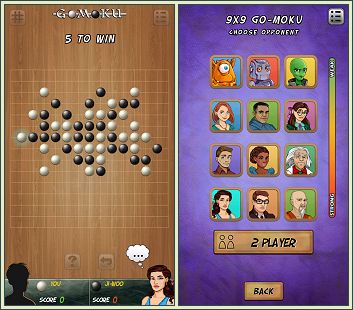
AI Factory's new Go-moku/Gomoku game is a sister product to Tic Tac Toe Universe released in July, but adding 3 harder opponents and losing the 3 weakest from Tic Tac Toe Universe for the more serious player. It provides 9x9, 11x11 and 15x15 grids. In testing against the top 5 other products on Google Play it won with a clean sweep of 10 wins and 0 losses, so it should provide a good challenge to most players. |
 |
|
|
From July 2014 we indicated that our Chess Free has been featured as an integral part of the charming new short film "The Knight Train" by Tasha Sharp and Lee Scott of Cut To The Dog Productions. This delightful cameo tells the story of a teenager crossing generations to learn to play chess.
Users can now view this short film on Youtube: The Knight Train. |
 |
|
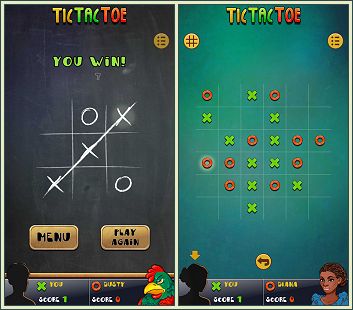
AI Factory released the new Android game Tic Tac Toe Universe which provides 3x3, 4x4, 5x5, 6x6 and 15x15 game from the family Tic tac Toe to Gomoku. These include a new ladder system that we have not yet included in our other games. As a player you complete with 12 animated opponents. This is based on MCTS (Monte-carlo Tree Search) instead of minimax to give a more human-like style. |
 |
|
|
At the end of May, the download count for AI
Factory apps on Android added a 9th digit, exceeding 100,000,000
downloads! That is a hard number to imagine but, slicing it
another way, we have 50 games completed per second and one
new user added every second. That is a lot of people playing our
games and, of course, a valuable source of input to help us improve
our games. This high volume of input makes the process of fine tuning
much easier. Users vote for what they want and, using analytics,
we can also see what artwork users choose in the games, so we can
fine tune the aesthetics as well as the features. It is an extraordinary
industry!
|
 |
|
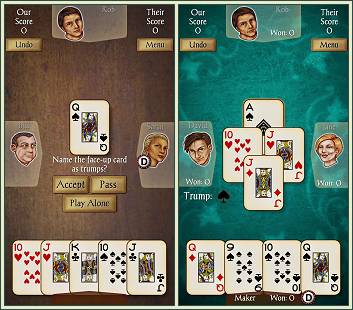
Over Christmas we published the first version of our latest trick-taking card game "Euchre", which was our most requested game. This 4 player trick-taking game uses only 24 of the 52 card deck, dealing each player 5 cards. Despite the simplification of the reduced deck and smaller hands, this game adds complexities over trick taking games such as Spades as 3 cards are not dealt, so the player has to not only anticipate who has which cards but also which cards are not in play. This product immediately did well, but from feedback from our users we went on to improve it significantly further still. It is now #1 ranked from some 40 Euchre products. |
 |
|
|
Chess Free has been featured as an integral part of the charming new short film "The Knight Train" by Tasha Sharp and Lee Scott of Cut To The Dog Productions. This delightful cameo tells the story of a teenager crossing generations to learn to play chess. The Knight Train has been accepted by the Trinity International Film Festival in Detroit and the Deep Fried Film Festival in Scotland, with others expected to follow.
Existing Chess Free users may also recognise from the promotional poster below that the piece shown closely matches the king in our latest piece set: the Lewis set. This short film will be available for public viewing in the near future. Watch out for it! |
 |
|
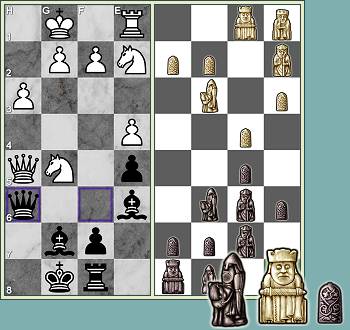
We have just released a new substantial update
to our Chess v2.0, adding landscape for tablets, 2 new chess sets
including a Lewis set, Google Play Games, Cloud Support, Professional
mode, ELO rating, full algebraic notation and endgame improvements.
Chess
Free is the #1 ranked app in Google's Top Board Games from
280 listed, with over 32 million downloads. The professional mode
does not allow the user to use the various help facilities such
as hint, undo and the tutor, and calculates an ELO rating for the
user. Adding Google Play Games allows users to work for achievements
and to compare their performance against other players in the leaderboards.
|
 |
|
|
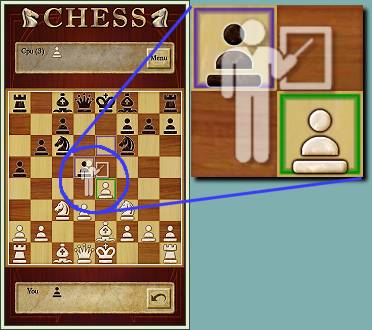
Chess version 1.8 just recently released now
supports a chess tutor. Our tutor has implemented a different take
on the usual idea - rather than divert the user into a separate
tutorial, which can feel a bit like an exam, we have provided in-play
help. Our approach has been to simply recommend a piece to move,
but not where to move it to. This obliges the user to think about
what that move should be, so the recommendation becomes a puzzle
set as the selected piece must have some non-obvious beneficial
play that is better than the more obvious choice. These become natural
in-game problems for the player to solve.
|
 |
|
|
This tutor has been received very well, with an approval rate of 80%. Chess Free is still, by far, our most popular product.
|
|
Christmas season is high adrenaline as we get
apps in shape for the seasonal spike. Happily for us we have 8 apps
that are best-of-type in the app listing (e.g. top ranked Chess
among all competing Chess apps). We even managed to have our Chess
Free as the #1 Android game in Norway, which was an unexpected
accolade.
Currently we are updating our existing apps to add customer requested features before we embark on new titles in 2014. |
 |
|
During the year we have been making good use of analytics. Of those apps substantially
updated over 2013, our Spades Free has taken the
most work. This mostly floated in 2nd or 3rd place among competing
Spades apps but is now clearly #1, some 12 places in the Cards
& Casino ahead of our next rival. However we have another new
version getting ready for release soon, so watch that space.
We hope you have a Merry Christmas and a very happy New Year! |
|
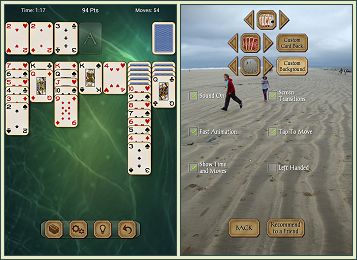
After a long spell of updating the infrastructure
of our existing titles, AI Factory has finally managed to release a
new title for Android, Solitaire Free. Solitaire introduces a new feature
for AI Factory titles, adding the option for the user to select
and crop their own pictures as game backdrops. This has proved a
popular feature, which was also carried to Spades Free, where it
was even more popular. Despite the huge number of Android Solitaire
apps out there, our title quickly ascended to the 4th most popular
with a sustained high download rate. AI Factory expects to now roll
out new titles more often.
|
 |
|
|
AI Factory has been
pre-occupied in the last few months with product updates and enhancements,
rather than new products. Since our last news we have had 22 product
updates to gradually provide better device support, stability and
artwork, but also to include our own in-house net control that allows
us to keep our users informed about new products and updates. Generally
all this has contributed to the range becoming even more solid than
before. Our total user base passed the 50 million downloads mark
over Christmas and now stands at 52 million.
|
 |
|
|
However new products are on their way, the
first in the next few weeks. We then expect to roll-out a number
of new games using some powerful new AI technology.
Our thanks to our many users who have been helpful providing product input and suggestions, which we have gratefully taken on board. |
|
At the end of August we had accumulated 40,000,000
downloads of our AI Factory Android apps. This is a 700% increase
over the same time last year, so clearly a good year for us. Key
to success here has been keeping our apps working well with all
the new devices coming out. By the end of last year, tablets only
accounted for 2% of our users, but since then this has grown to
over 6% as more and more people use tablets for gaming.
Note! : We are currently working with Blit to take our portfolio to a new platform, so watch this space! |
 |
|
|
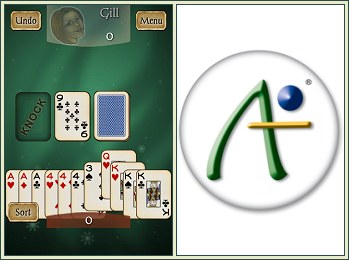
We have just released Gin Rummy Free, which
has leapt up the Android Cards and Casino charts, currently #13
in the US.
This product has also been the first to step up the UI candy to use such features as menu items with momentum. Following our new direction in AI, Gin Rummy uses new methods to get the best AI play, allowing it to play all parts of the game very well. The app is also our first drag-and-drop card game. |
 |
|
Additional news is that our products have just
gone live in Indonesia under the Antix system under MLW Telecom
and Telkomsel. The seamless Antix system allow such diverse devices
as mobile phones and TVs to share common game binaries. Indonesia
is a big market with 100 million subscribers on this service, so
is an interesting development for AI Factory.
|
|
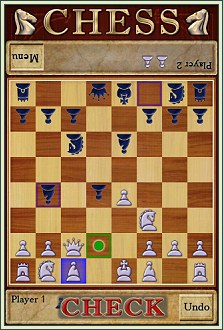
Compared to 16 months ago, when we had 1.5 million Android downloads, we have now topped 30 million in total. Of these our most used app is Chess Free, which last week went above 10 million - a healthy haul for just one app. We have been recently re-working our portfolio to raise the bar in terms of app presentation in a market where people increasingly expect much more from their games. In particular we have been paying more attention to tablet computers, which, since last year, has increased from under 1% to over 5% of our users. In consequence our general rate of new game production has slowed, but we will have a new title released in the next few days. |
 |
|
|
Sticky Blocks™ is released on iOS! This
is AI Factory's first direct publishing of an iOS app, although
we already have many game engines on iOS through licensing to Optime
and Spark
Plug Games.
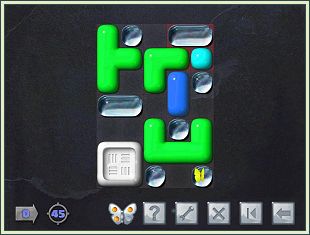
Sticky Blocks™ further develops the block sliding concept, already advanced by Move it!™, which raised the bar by creating sliding puzzles with a wide variety of shapes that each freely moved in 2-dimensions, rather than fixing to the more usual 1-dimensional puzzle sliders. |
 |
|
|
Sticky Blocks™ now adds a significant new twist introducing wobbling
"Sticky" shapes that will fuse together if they touch.
Once fused the Sticky pieces permanently change the puzzle, which
may then become insolvable, so planning is needed!
This new evolution in AI Factory products also expands the play elements, with collectables and rewards during the game, with full Game Center integration. See press release and also Facebook |
|
On the back of our Spades release, which rose quickly
among the card and casino games on the Android market, we have just
added Hearts.
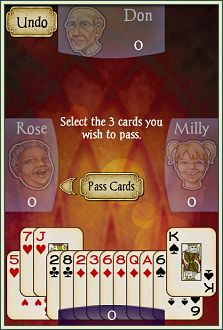
This is an easier game than Spades as there are no target contracts, so the search can simply be "greedy", rejecting all points cards, rather than aiming for a specific target number of tricks. However it still offers a challenging AI task. To contribute to this work, we are also currently in collaboration with Artificial Intelligence Research Centre, who have been developing MCTS around our Dou Di Zhou game engine, publishing a paper based on this and presenting the results to the CIG conference in Seoul. |
 |
|
|
This month saw our first release of a card game
for Android, the contract trick-taking game Spades.
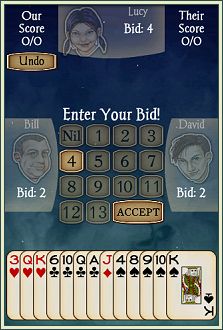
This is the first western game we have created using Monte Carlo tree search (MCTS), so was an experiment for us. We have combined MCTS with static evaluation and found ways to avoid many of the pitfalls of MCTS, which naturally and easily wants to pick non-optimum plays. Spades is a casual game but with a play complexity similar to Bridge, which is a challenging game for AI. This, and other non-perfect information games, offer a particular challenge as the AI not only needs to make exact calculations, but also needs to read play inferences. All these issues add another layer to the complexity of the AI, and as time goes on we expect to continue improving Spades play. |
 |
|
|
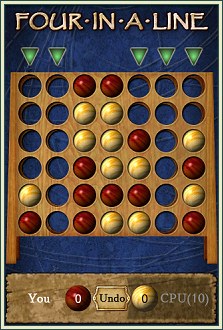
This month we have released our four-in-a-line Android product, bringing our
total family of Android apps up to 8 products. These have
all surged up the Brain and Puzzle free charts and now 4
of these are in the top 20, whereas a month ago we had just
one. On May 9th our total download count exceeded 5,000,000
downloads, currently running at nearly 2,000,000 per month.
The success of these has focussed our attention on this platform. Now, as Android tablets are becoming more commonplace, we will be upgrading our products to take advantage of these larger screen formats. We have also recently been upgrading our products to support the Heyzap social gaming network, which allows users to see what their friends are playing and to share tips. Heyzap also links to Twitter and Facebook. |
 |
|
|
After a very strong 2 months AI Factory has
doubled its total download count to 3,000,000 and all 6 of its games
are inside the top 100 Brain and Puzzle games.
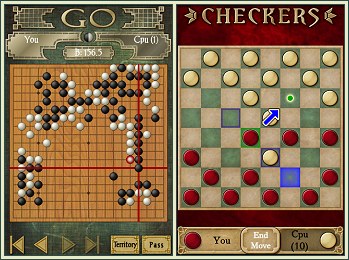
The leading game is Chess, which is currently #9, with Reversi at #21, Backgammon #23, Move it! #46, Checkers #58 and Go #83. Of these recent releases, Reversi has been our fastest mover and Go our hardest game. |
 |
|
|
The
latest release is Checkers, which has found particular favour in
the U.S. market but has only been out a short time so is playing
catch-up in the charts.
We are readying for two new titles to be released very shortly, with more in preparation. The Android space is increasing rapidly and we are doing our best to try and fill it! |
|
One of the more high profile products we have
been involved in is due for release soon: the impressive "Full
House Poker" for XBox 360, which was recently shown at
CES.
It will also be on display at GDC San Francisco, which we will be attending. |
 |
|
|
We created the AI for this product and it has been a big exercise for our probability engine, taking some 6 months of work. Full House Poker has already created a buzz and is set to be one of the higher profile products for the start of 2011. As can be seen, it is a product that sets a high graphical standard with a rich environment and set of animations to accompany the game. This is a full-on fun product! See it, and us, at GDC!
|
|
AI Factory has just passed 1,500,000 downloads
from Android appstore, averaging around 30,000 per day.
We now have 5 Android apps in service on the Android appstore and 4 of these also on TStore (and Amazon very shortly). We have another app in development and several more to follow. We also have 5 of our game engines in service on iPhone, through Optime and Spark Plug Games, and will be publishing our own iPhone app directly very soon. |
 |
|
|
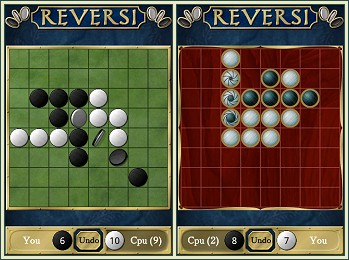
Our most recent Android app is Reversi Free, which very quickly climbed
the Android Charts, and can be seen here (above right).
Our Android apps are also prepared for pad use and are already in common use on devices such as the Samsung Galaxy Tab, taking advantage of its higher resolution screen. |
|
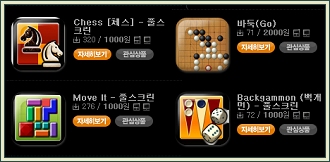
This month we released 4 Android games into
the South Korean market, in the ubiquitous TStore. We will also
be following with other titles. The South Korean Android market
only started in February 2010, so is a "new" market, and
has already doubled in size in the last quarter to 5 million users
with further rapid expansion expected.
|
 |
|
|
Android is already ahead of iPhone by over 3:1
here and expected to rapidly grow as Android becomes the standard
OS for higher-end Korean smartphones.
As well as adding our apps to TStore in Korea, we have also released Go Free to the Android Market. |
|
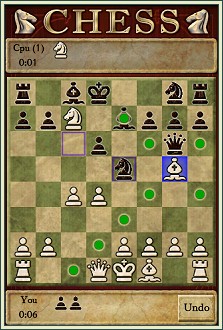
Our third entry into Android is Chess Free, which also quickly established itself into the top 100 Brain and Puzzle games.
Chess Free is a very polished application with well crafted graphics and shares the same chess engine as Microsoft's MSN Chess, which also uses our Treebeard chess engine. Treebeard uses non-conventional method for chess analysis, based on probability, giving the game engine a more human-like playing style. Treebeard also appears in various PC products for Japan and the West. We have also re-released Move it!, now including an updated art style, music and added animation. See Move it! PRESS RELEASE |
 |
|
|
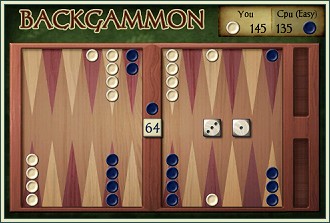
After our Move it! game, we have quickly followed up
with our Backgammon Free Android game. This has been very
popular and is now firmly locked into the top 100 Brain and Puzzle
games.
Backgammon again followed the example of our previous apps to maintain
a very high visual quality, and quickly established a solid 4.5
star rating. At about the same time Optime also released our Backgammon
engine on iPhone as Backgammon Free, using a different art style. We are expecting to continue releasing multiple Android apps in
the following months.
|
 |
|
|
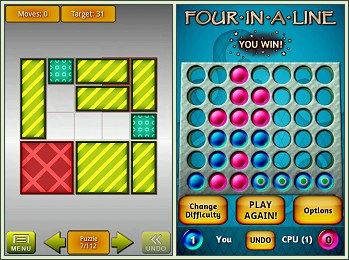
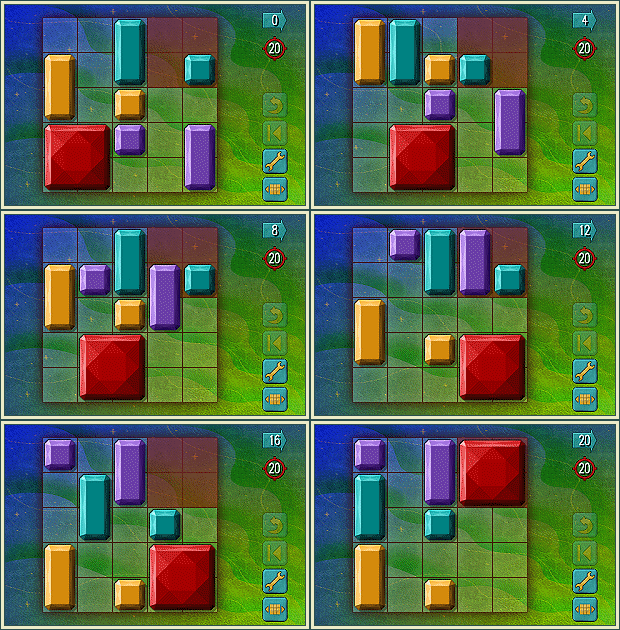
This month we are rolling out our first directly
published puzzle game Move it!™ on Android.
This is the puzzle to fill the void that should have been filled
by successors to the genius Yoshigahara's famous "Rush Hour" block
puzzle.This void has opened because of the sheer difficulty of
synthesising such puzzles.
Move it!™ removes the restrictions that Rush Hour imposed, adding greater richness to a game with a simpler format. |
 |
|
|
This "simplicity" hides puzzles of great potential
complexity and elegance!
Move it!™ been a long term project of AI Factory. By combining our existing technology that has taken our Shogi program twice to world rank 3rd, with new technology developed for puzzle creation, we finally cracked this difficult task. We already have a successor to Move it!™ in production and will follow with many more from this attractive genre. Move it!™ will be rolled out shortly on iPhone, iPad and Antix, with more platforms to follow! |
|
Apart from the annual World Computer Shogi Championships
that we always compete in in Tokyo, this year had a another distraction
as we gave our first lecture within the School of Computer Science
at the Tokyo University of Technology.
They are running a computer gaming course based around our gaming technology and this was our first hand-ons lecture for the course. |
 |
|
|
We also provided a second
lecture that they gave on our behalf the following week. This is
outside any previous lecture we have ever given, requiring a translator
for the 90 minute lecture. Previously lectures given in Japan have
always been in English.
This industry-academia synergy is healthy and a good way to feed in new ideas. AI Factory is also currently starting a research collaboration with Bradford and Imperial for MCTS (Monte Carlo Tree Search). |
|
AI Factory has its first true Windows 7 title.
Although touchscreen is now already almost passé for mobile devices,
it is still relatively "new" in the desktop and laptop arena.
This title makes use of our bio-simulation technology that we described in our newsletter article Emulating Biological Systems – 2 of 2. |
 |
|
|
However this now allows the user
to more directly interact with the simulation. You can now touch the tank directly with your
finger and have the fish react as they might if touching a real
tank. This, and other features, needed some new AI. You can see
this at the Unbalance
site.
|
|
AI Factory is currently collaborating with the Tokyo University of Technology to bring some of our AI and product development techniques into the course teaching there. Of course AI Factory has been involved in Japan game products throughout its history.
|
 |
|
|
Among AI Factory's founders there has also always been a background in Academia. These links are still very much active with other collaborations currently planned with UK Universities.
Such links also encourage undergraduate involvement with AI Factory, a potential rich source of fresh input from the new waves of top graduates which is always welcome. This healthy industry-academia synergy is a valuable source of new ideas. |
|
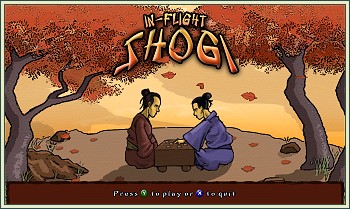
Flying to the east? You might like to while away some time with our in-flight Shogi engine (Japanese Chess), which is currently published in a title by DTI Software. Increasingly more flights provide dedicated game screens for each passenger in addition to in-flight movies, so expect to see more titles coming from AI Factory in the near future. Currently we have Shogi, Go and Bridge games in service.
|
 |
|
|
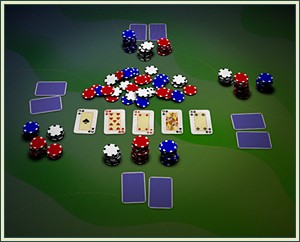
Taking advantage of our existing probability engine and recent experience with UCT (Mote Carlo), we are well advanced in creating a strong Poker engine, initially targeted for Texas Hold'em. This is currently running non-stop on 8 processors, learning to improve its playing parameters. Poker is our most requested game engine, so its development was an inevitable addition to our range. The Poker engine's development will also feature in the coming Summer newsletter, which will talk about the types of learning that have been applied to it.
Our Poker engine will be available for licensing very soon. |
 |
|
|
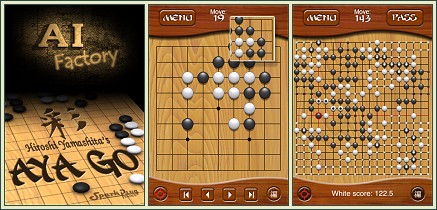
We are working with Spark Plug Games to bring a series of AI-based games to iPhone/iPod. The first of these is Aya Go, released on 20th February, the award-winning Go engine developed by Hiroshi Yamashita.
|
 |
|
|
This month sees the Japanese release of our new Chess product. Play is set in a comfortable Western-style sunroom at twilight, with 4 distinct piece sets and boards to choose from (including metal pieces on a glass board, shown right), and good camera control to survey the scene to best advantage.
There are 30 levels of AI opponent and tutor, as well as human vs human mode. Added to this a hint feature, plus timer and handicap options, all designed to improve your enjoyment and your game! |
 |
|
|
There's just time to wish a very happy Christmas Season to all
our friends and clients - have a successful holiday and
a great New Year!
Click on the image on the right to see
a full size version of this card...
|
 |
|
|
This month sees the Japanese PC release of our Seawater Aquarium. Developed alongside the Freshwater Aquarium released earlier this year, Seawater Aquarium also builds on its mobile original to make excellent use of the extra resources available on PC. It displays the same variety of features and increased realism as its freshwater companion, combined with a new variety of fish, environments and objects. |
||
|
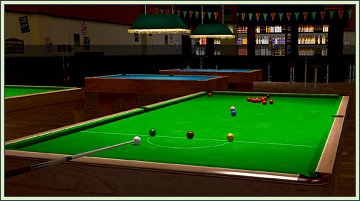
We have our advanced Billiards 3D releasing in Japan on October 17th. This is our first product to incorporate our new teaching system, which is not scripted teaching but a dynamic system where you play against the tutor and they will test you on shots during play. In doing so the tutor plays their own shots like a friendly teacher, making sure that you are left with interesting shots to try.
|
 |
|
|
The tutor also will arrange it so that neither the learning player nor the tutor run away with the game. This way your teacher will balance to match your improving play. Once you have reached a good level, you can pick a more advanced tutor so you can take your game further.
This is a significant step up in our product range, utilising the AI to model a real teacher opponent to play against, instead of depending on de-humanised scripted teaching. |
|
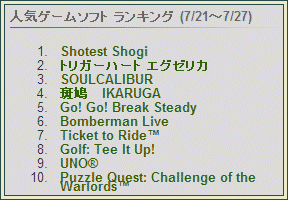
Our Xbox 360 Shotest Shogi product is now live on Xbox Live in Japan, developed in collaboration with Rubicon Development. This is an unannounced release and will be followed by a full worldwide launch in the fall. In consequence only Japanese users can currently see it. However the XBLA version does fully support EMEA, Chinese, Korean and Japanese languages, and is the first product with our advanced Shogi teaching system, which has been well received and prompted many requests to also take this over to our PC products. Shotest Shogi is our first entry into the large XBLA market.
|
 |
|
|
Despite appearing unpromoted we note that in its first 2 weeks Shotest Shogi entered and stayed top of the Live Arcade products in Japan (see image above). So even as a stealth "unlaunched" product it still got noticed! Of course the worldwide version will have a full launch, so will benefit from much more exposure.
|
|
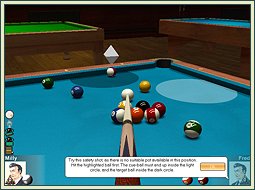
The last period has been shared between a number of product developments, but one key one we are excited about is our new 3D Pool / Snooker product. This has taken our existing Pool / Snooker product to the next level, with a completely new environment, taking advantage of newer faster 3D hardware.
However a key added feature is that we have also taken our already capable player AI to a higher level as well, providing much more capable safety play. An impetus for doing this was the introduction of an AI-driven tutorial system. |
 |
|
|
Our Shogi product very successfully used a script-based tutorial to provide teaching, but for Pool / Snooker we wanted to create a dynamic teaching system which would provide lessons embedded in the player-tutor games. To make this work well the AI really needed to be spot-on.
This product will first launch in Japan, but we are currently looking for partners/publisher to take this further. We will be at "Develop in Brighton" in a couple of days. Maybe see you there! |
|
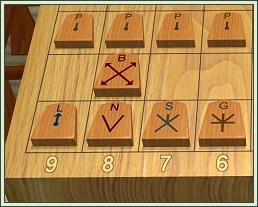
We now have a total of 5 Shogi products either already on release or weeks away from release. The latest of these is Shotest Shogi 3D which has just gone on sale. This is an English-language only product with full 3D, rendered in an attractive Japanese setting. An added feature of this product is that two westernised Shogi sets are provided in addition to the standard Japanese set. One of these uses a design which shows the legal moves that each piece can make (pictured right). Since Shogi is a significant product for us, we now have an "Official Shotest Shogi Website" at www.shotest.co.uk. This will be the centre now for new Shogi products and Shogi news in general.
|
 |
|
|
We are also working on a next generation version of Pool and Snooker right now. Building on our older Friday Night 3D Pool product, this takes advantage of the improved newer graphics processors, and offers a good prospect of providing a capable basis for an on-line game, offering richer graphics than other existing on-line Pool/Snooker products.
|
|
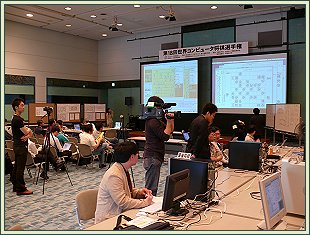
The CSA World Computer Shogi Championship in Japan has just completed, and we already have a review article.
Unlike human competition, Computer tournaments have a long history of throwing up bizarre games, and this year was no exception. Of these the one that drew the most attention was the Shogi program MOVE#1 running on the exotic super-fast FPGA (Field Programmable Gate Array). Speed is no insurance against goofs and the program 28 times spurned mate-in-one, eventually choosing a draw by repetition instead! |
 |
|
|
The winner of the whole event was also determined by no more than a simple clock error. However this year it was our turn to fall into our first ever elephant trap as we accidentally ran a broken build version of Shotest in round eight. With random moves what would have been an easy routine win was instead a super-fast loss. This left us on 4 wins 5 losses instead of 5 wins and 4 losses, pushing our ranking down 4 places and out of the seedings.
|
|
Goofs apart, Shotest held its own and, with 5 wins, would have been tied in games with TACOS (which it nearly beat) and K-Shogi, which were last year's 6th and 7th world ranked programs. We'll be back next year!
|
|
We have two Shogi products coming to completion at about the same time, 3D Shogi on the PC and Shotest Shogi on Xbox360, but the PC version just got there first. Shogi is Japan's alternative to western chess and is more popular there than chess is here.
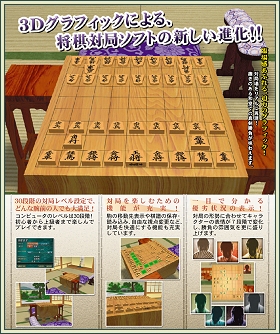
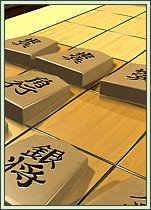
3D Shogi is published by Unbalance and is our first new PC Shogi product since our Shotest engine topped the sales charts in Japan some 5 years ago. The double launch also coincides with our annual entry in the CSA World Championship near Tokyo. A significant difference between the new products and our previous older Shogi products is that these games are now rendered in finely crafted 3D environments. In the same way as Mah-jong, Shogi is also an aesthetic experience as well as a game. However Shogi is also a much deeper game than Mah-jong, and arguably a better game than chess. This PC product is currently Japanese-only language support, but an English version will follow. |
 |
|
|
GDC 2008 in San Francisco was our first conference of the year.
This provides an opportunity to re-connect with existing developer
and publishing partners and also to sample which way the market
is currently going. One area that we are very involved in is with
Antix, which is rapidly looking like the way to go for gaming
on mobile devices. Antix as a company is new, but was created
from mature groupings from within the industry. As it looks now,
their technology may well become an industry standard, where otherwise
the industry seems wildly divergent. We also met up with our regular
partners: It is curious how you find that you have to travel 4000
miles to meet with people who work just 20 miles away! I guess
it is down to time and opportunity!
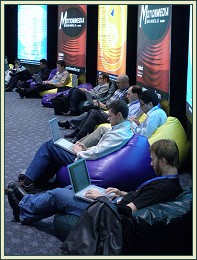
The bulk of our time is again dominated by XBLA and Shogi, which has taken much of our attention this month. |
 |
|
|
Our mobile Aquarium has moved up to a high-resolution
version for the PC. Without the restrictions imposed by mobile 3D
GPUs, this allows increased realism in the product with high resolution
and more lighting effects (such as water ripples on plants and fish).
Of course it is also to show off more fish at any one time so the
more advanced fish behaviour such as shoaling can be seen (See the
Autumn newsletter).
|
 |
|
|
Take a look at the Unbalance
website to see some demo movies of this running. This product
allows the user to buy and breed fish in an Aquarium that they have
designed. This is the kind of product that goes down well in Japan,
but will be also making its way to the western market. Another more
exotic product in this genre is destined for release in late Q2.
|
|
The best wishes of the Christmas Season to all
our friends and clients - we hope you all have a great holiday and
a successful New Year!
Click on the image on the right to see
a full size version of this card...
|
 |
|
|
A major project currently nearing completion
at AI Factory is a 3D Shogi product, in collaboration with Rubicon
Mobile. This provides a rich environment with advanced 3D graphics,
providing a highly aesthetic computer Shogi game experience. However
the feature that really distinguishes this new 3D Shogi product
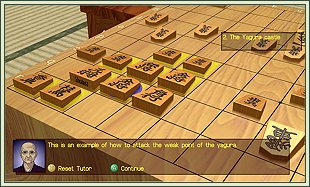
is its advanced tutorial system, which provides a powerful and easy
way to learn this particularly complex game (see previous newsletters).
|
 |
|
|
The product demonstrates and explains the principles
by playing out examples and setting tests for the player. For many
potential new Shogi players this will offer a far more accessable
and agreeable way of learning than is possible through traditional
book study.
|
|
One of the more exciting projects we have been involved in recently
is a highly realistic bio-simulation on a mobile phone running
under Brew. This is currently in-service in Japan and provides
the mobile user with a virtual Aquarium for keeping either sea
or freshwater fish. The user has to look after their fish and
can also breed them. The level of realism is such that many previewing
our emulated fish were convinced they were real and that this
was just a movie. Not so!
This is a first generation product, with generation
2 already in late development and generation 3 is at an advanced
design stage. All this rests on the more powerful OpenGL mobile
phones currently coming into service, providing advanced 3D rendering
comparable to early PCs with 3D cards. This is a lot of power for
such a tiny device!
|
 |
|
|
Our Treebeard Chess
engine is now the featured Chess engine for Microsoft's MSN
games, so will be clocking up many more games of chess than
ever had before, through the 14 million people that make up the
MSN game-playing community. Treebeard is not like many conventional
chess programs, depending on a deep analysis of a small number of
positions rather than a simple evaluation of millions of positions.
This gives the game a more human-like style with a more subtle appreciation
of positional features but capable of falling into tactical traps.
|
 |
|
|
This makes for a more satisfying game for the
casual player. You may well see other of AI Factory's game engines
join Treebeard soon.
|
|
In-flight gaming is now pretty well a standard
feature for airlines, provided as part of the on-line entertainment
package designed to keep passengers amused during the extended hours
needed for long haul flights. If you are a Bridge player you might
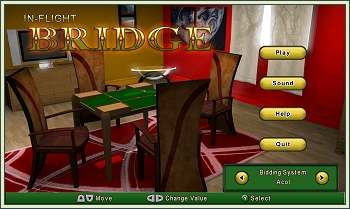
like to look out for our Bridge program, currently featured on Emirates
Airlines and Cathay Pacific Airways,
as published by DTI
Software (recognized as the leader in the In-Flight Entertainment
industry).
|
 |
|
|
AI Factory also has other games lined up to
join this in-flight genre. Given the rapidly expanded capabilities
of in-flight game computers this is likely to continue to be an
area of rapid growth, offering the passenger an increasingly wider
range of game options, including more sophisticated games. AI Factory
will continue to be a player in this area.
|
|
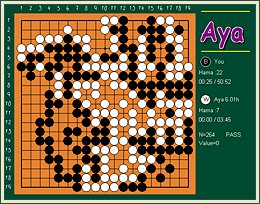
AI Factory has recently added the Go program
Aya to its engine catalogue, in addition to the existing Go++. Aya
plays at 7 to 8 Kyu and provides AI Factory with a more compact
Go program, more suitable for smaller platforms, but still very
competitive. It is currently being applied on a new platform.
Aya
is authored by Hiroshi Yamashita, who recently won the World Computer
Shogi Championship in Japan, and has been in development for several
years. At its last competitive event it came 4th from 17 Go programs.
AI Factory welcomes Hiroshi Yamashita to the ranks of our AI engineering!
|
 |
|
|
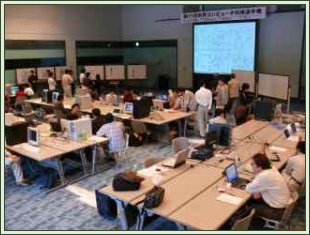
The CSA World championship is concluded and
the favourite and previous world champion "Bonanza"
(see last news) has moved down 3 places to 4th, but it was a close
and exciting contest. Our program Shotest
did not get to meet Bonanza, but did move up a modest 2 places from
last year's ranking. That bucked the trend, where the net result
for re-competing programs was to lose ranking.
A clear development this year has been that
all the qualifying programs to the final round ran on multi-core
machines, with the top programs using 8 fast cores.
|
 |
|
|
This is clearly the way things are going, so
our program will next year move up from single to multi-core, giving
it a more even chance to contest for the top places. See the quarterly newsletter for the coming full tournament
report.
|
|
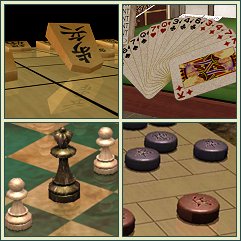
The first quarter of this year has so far seen
us ship more engines than any previous quarter. Historically our
long-term front runners have been Chess, Bridge and Pool/Snooker,
but in the last 6 months Shogi has been the top engine, followed by Bridge,
Chess and then Chinese Chess.
Of course, Shogi has also received particular
interest as this is one of our competition engines, so once again
we will be off to compete in the World Championship in Japan on
May 3rd. Computer Shogi has received more attention this year than
any previous, with the new World Champion "Bonanza",
which everyone is keen to beat. Our engine "Shotest"
is taking games off Bonanza in testing, so we are interested to
see how it does in the Championship!
|
 |
|
|
Our end-of-year has been primarily work on Pool
and Snooker (see newsletter), and also Shogi. We are also gearing
up to adding puzzle titles to our engine resource, as we have a
purpose-designed generic AI architecture which can easily generate
both puzzle solvers and puzzle design. Squeezed in there we had
a short holiday seasonal blast at paintball, taking on the guys
at system7. This feels a lots like half a dozen on-line combat games
out there, so is the same thing, but for real. We have now crawled
back to our keyboards to tidy up our end-of-year commitments.
|
 |
|
|
Anyway, we take this chance to wish the
friends and clients of AI Factory a great holiday season!
Click on the image on the right to see
a full size version of this card...
|
|
We have been particularly active with Shogi
in our end of year, with two active Shogi contracts, two further
currently being assessed and a further two in early consideration.
We also have other Shogi spin-offs planned. This fits well with
our other schedules as we each year enter the World Computer Shogi
Championship in Japan, so added activity in this domain has useful
spin-offs for our competitive product. Those subscribed to our quarterly
newsletter will
have seen the recent publications on our Shogi engine. (The newsletter
is free and simple to subscribe to. You can unsubscribe at any time
and we do not pass your information on to any 3rd parties.)
|
 |
|
|
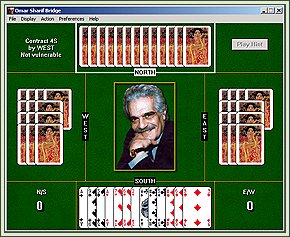
AI Factory have just
published the Omar Sharif Bridge product
for the PC, designed to run on minimal PC hardware, and available
from the Trading
Centre. Bridge is generally considered the most challenging
of the imperfect information games. This is our second major version
of Bridge, the other being the full 3D product, available as Western
and Japanese language products. The game engine is available for
licensing as a source.
|
 |
|
|
Part of July's agenda was the Game
Developer's Conference in Brighton, where we focussed on porting
casual games to mobiles. A key discussion here was with NVidia where
we will be collaborating to port 3D games to use their GoForce 5500
chipset. With kit already donated by NVidia, we are on our way here.
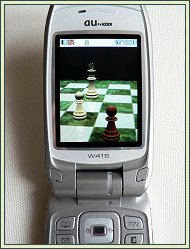
It is amazing to see that 3D applications that
might have struggled on PCs a few years ago, are now comfortably
running on mobiles. The picture here is our chess running on a Sony
Ericsson W41S, under OpenGL ES. The contemporary mobile is now clearly
an impressive games platform.
|
 |
|
|
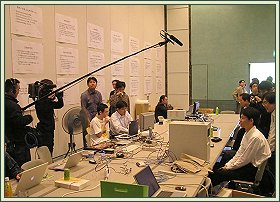
May is the month when we trek off to Japan to
compete in the World
Computer Shogi Championships, near Tokyo. This event attracts
many competitors and the popular media for what is Japan's most
popular game. This is a touchstone event for computer AI.
This year we had some extra problems as our
PC turned up in Japan with a big dent in the side and failed during
round one, losing us an otherwise precious won game. However with
a loaned PC on hand we recovered and still managed to retain our
position as "strongest western Shogi program". See our quarterly
newsletter for coverage and pictures.
|
 |
|
|
The key item this month is the signing of a
multi-engine contract with Microsoft, potentially covering all platforms.
AI Factory game engines may therefore appear
in several guises under the Microsoft label.
|
 |
|
|
This takes advantage of AI Factory's key specialisation,
to provide in-depth AI content for 3rd party development. The mature
generic AI core and established uniform engine interface will allow
Microsoft to rapidly integrate multiple AI game engines with low
development costs, as all engines share the same interface and game
control. For us, this is the start of a new and challenging contract,
which we look forward to developing.
|
|
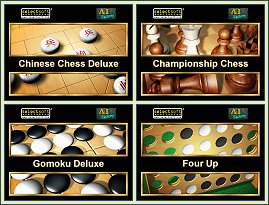
February saw our first new U.S. product for
18 months, as our more recent publishing has been in Japan, England,
France, Holland, Germany and Italy. This was for the products Chinese
Chess Deluxe, Championship Chess, Gomoku
Deluxe and Four-up for the California-based
publisher SelectSoft.
This is our first stand-alone published Chinese
Chess program, and won the Gold medal twice in the Computer Olympiads.
Chinese Chess is played across much of the far east and has a huge
player base. This is also a likely candidate for providing a future
mobile Chinese Chess game.
|
 |
|
|
We've had our busiest year at AI Factory, with
the roll-out of 3 products in Japan, and 10 games through PDA compilations.
We are now embarked on a substantial new AI project which is still
under wraps, and discussing a number of other new projects.
We wish all our associated publishers and
developing groups a happy and profitable Christmas and a Great New
Year!
Click on the image on the right to see
a full size version of this card...
|
 |
|
|
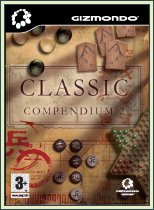
The Classic Compendium 2
(Eastern pack) for the Gizmondo,
was released this month, coinciding with the Gizmondo unit launch
in the US. Once again the 5 classic games - Shogi, Gomoku, Chinese
Checkers, Chinese Chess and Taipei - present players with great
quality board and casual games on a portable device.
The compilation provides both challenging play
standards and weaker computer opponents, emulating believably weak
human play, meaning that the compendium is equally suited for beginner
or life-long enthusiast.
The Shogi engine featured in this compilation
is the same one that competed in the 15th World
Computer Shogi Championship detailed in the May
2005 news item.
|
 |
|
|
The GDCE
(Game Developers Conference Europe), is
one of the focal events for the games development
community to exchange ideas, and combines with the IGDA
for one of their many social business gatherings. As is often the
case, these events collide, so the time also had to be shared with
the new GME
(Game Market Europe). This is the 6th such
trade event for us over the last 12 months.
Our particular interest this year was mobiles,
which was a substantial topic at the event. Our current schedule
looks as if it will be almost entirely dominated by mobile work
over the next 6 months.
|
 |
|
|
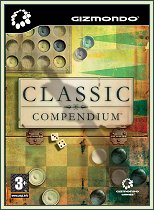
The Classic Compendium
(Western pack) for the Gizmondo,
is now out on the streets. This provides the traveller with portable
classic games, offering a very high standard of play which is often
missing from portable devices.
This mobile gaming companion provides a long-term
challenge with its multiple AI opponents, each with their different
play styles. You start at the bottom of the rankings ladder
and work your way up. The AI genuinely provides both the highest
play standards and also weaker computer opponents, engineered
to emulate weak human play, making the compendium an
ideal learning tool.
|
 |
|
|
E3 is the biggest event
in the computer games industry calendar, so it's going to get a
mention! Again the Los Angeles Convention Center exhibition was
bigger, noisier and with more attendees than ever before. AI
Factory were there in the thick of it, from 18th to 20th May
and beyond, to work through several publishing
deals, yet to be announced.
Among these are plans for the creation of AI
for the classic game genre of Hexwar, currently
already supported by an active on-line gaming
community (see www.hexwar.com).
AI Factory have also just concluded contracts with Mindscape
and Denda.
|
 |
|
|
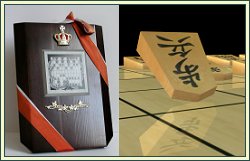
AI Factory's Shogi program
Shotest successfully competed in the 15th
World Computer Shogi Championship in Tokyo in May 2005. This
is the version for release on the pocket console Gizmondo.
Unlike in previous contests, Shotest was this
time running on the slowest machine at the event! .. but competing
head-to-head with high speed 128-bit AthlonFX processors. Despite
this, Shotest came a respectable 13th out of
53 entries, tied on wins with the many times world champion
Kanazawa.
|
 |
|
|
Shotest has always maintained its position as
the highest placed western Shogi program,
twice coming 3rd out of 50 programs and,
in its last competing event on a full speed computer, was the only
program that could beat the new world champion in the final top
8 all-play-all final round. See reports on the championship,
and the results on the official CSA
site.
|
||
|
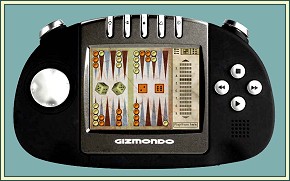
AI Factory are currently in production for classic
games for the exciting new Gizmondo
platform. This very attractive feature-rich handheld console is
already in the UK and set for European, US and Eastern markets very
soon. The classic game pack will come in 2 parts, East
and West.
The first will be the West pack, due in June,
with Chess, Checkers,
Backgammon, Reversi
and Four-in-a-Line, including our innovative
"Treebeard" chess engine. The follow-on East pack will include Shogi,
Chinese Chess, Gomoku,
Chinese Checkers and TaiPei.
|
 |
|
The Shogi program featured
in the East pack will be entered in the coming World
Computer Shogi Championship in Tokyo in May 2005, so watch this
space for details of how it does!
|
||
|
A recent product, nearly ready for publication,
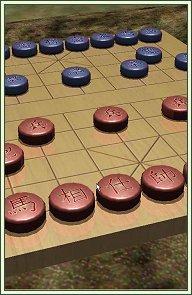
is AI Factory's Chinese Chess. Chinese Chess
probably has more players worldwide than Chess, although it is somewhat
less well known in the West. This game adds another twist to the
genre of chess-like games, as it confines certain pieces to move
only in restricted regions of the board. The game engine in this
product has already proven itself in competition, winning the gold
medal in two computer Olympiads. This product follows our current
trend of setting classic games within lavish 3D products, giving
the player access to the game within a beautiful game environment,
as well as providing attractive pieces, lighting and 3D-enhanced
reflections.
|
 |
|
|
9-ball, 8-ball and Snooker in Japan. Unbalance
are to publish AI Factory's Pool and Snooker
game in Japan for full release in February (details on http://www.unbalance.co.jp/honkaku/billiards/).
This new product has exceeded the functionality of AI Factory's
previous Pool Snooker product published in the west, to include
many extra features, including better cameras and real human opponents
instead of the older cartoon opponents.
This is our second major Japanese product,
with three more products planned in the pipeline, including 2 completely
new product types.
|
 |
|
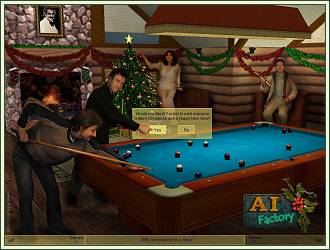
AI Factory will be operating at a seasonally
adjusted rate during the Christmas to New Year interval. However
mails will get processed.
We have had a very busy year and expect the
same next year!
Our best wishes to all our customers in
this holiday season and the coming New Year!
Click on the image on the right to see
a full size version...
|
 |
|
|
AI Factory is currently
working with Buruxo of South Korea to create
AI for the game Spell Mage. This on-line
game is already well-developed, and can be accessed at http://www.spellmage.com/,
where login passwords can be requested for commercial testing. Spell
Mage is an intriguing game which combines complex tactical battles
with a powerful educational theme. The players
pit their magical characters in combat and need to reveal the word
hidden by their opponents to defeat them. To do this requires language
skills to guess the word as it is exposed, but also strategic
and geometrical skills to carefully position characters to achieve
strong attacks.
The game therefore introduces an element of
competition into the education process. AI Factory will be producing
the AI for this unique game. Although primarily designed the Eastern
market, Buruxo and AI Factory are currently also seeking Western
publishers for Spell Mage.
UPDATE: Spellmage site no longer available.
|
 |
|
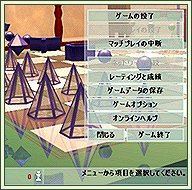
Treebeard Chess is
ready for launch in Japan. This game was completed as a first all-Japanese
product for the Japan PC market. A number of follow-on titles are
expected shortly. This will provide Japan with its first
all-Japanese 3D Chess product, with chess advice offered in
Japanese by the in-built chess coach. Chess is being launched in
two versions; one for the desktop and a second version for low-spec
notebooks, aimed primarily at the travelling businessperson.
|
 |
|
|
AI Factory is currently
working with Revolution Software to create
game components for an up-and-coming new title. Revolution
have a history of creating ground-breaking games
and are highly acclaimed for their innovative
gameplay. Each of their games have taken technical leaps forward
and their new work will certainly follow this trend.
AI Factory will also shortly be adding to the
range of game engines immediately available,
including Gobang and Tafl,
among others. Most of these will be using controlled limited resources
to make them suitable for mobile phone implementation.
|
 |
|
This was a busy month for AI Factory, particularly
in Japan. New contract negotiations have been started for console,
PC and mobile games; two of these in Japan, one in the US and one
in the UK. During this phase the core interface
technology used for all our engines has been evolved
to a version 3 of the engine technology. This has been designed
with mobile client and server needs as the first priority, but presents
an elegant and simple interface that makes all
platform developments very easy, with off-the-shelf ready-made
testbeds, common for all our engines. Watch
this space!
|
 |
|
|
Tournament Chess II
and Omar Sharif Bridge II released for
Global Star Software. Both of these products provide not only beautiful
3D implementations of the games, but also set them in full 3D environments.
With Bridge you get to see and hear Omar Sharif,
and also partner him as you progress through tournaments. In both
games you face player characters with true human
player characteristics. Both programs set new standards for
classic AI games.
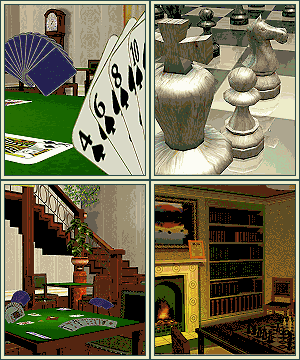
|
 |
|
|
The AI Factory on-line shop is launched: The
AI Factory Classic range includes Chinese Chess,
Gomoku, Backgammon,
TaiPei, Reversi,
Dominoes, Checkers,
Four-in-a-Line and Chess.
These games provide quality games at attractive budget prices. All
these engines are also available for 3rd party console/mobile/PC
implementations.
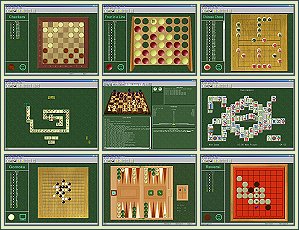
|
 |
|
|
Computer Go for South Korea.
South Korea has a higher proportion of Go players per head of population
than any other country, and dominates international competition.
AI Factory will shortly release the first Korean-language
Go product for this market, using the world's
strongest Go program.
|
 |
|
|
AI Factory develops and completes the next-generation
Chess engine "Treebeard", designed
to provide high AI Chess strength that can be used on both large
and small devices. Treebeard is the first Chess engine to make use
of the SUPER-SOMA algorithm (see:
http://www.informatik.uni-trier.de/~ley/db/indices/a-tree/r/Rollason:Jeff.html
or download SUPER-SOMA.doc
directly from here), which successfully placed the Japanese Chess
program Shotest as 3rd world-ranked and unrivalled strongest Western
program.
Although the first implementation of this new
engine is for Global Star's forthcoming PC product Tournament
Chess II, the engine's architecture has been purposely designed
for easy Server, Console
and Mobile implementations.
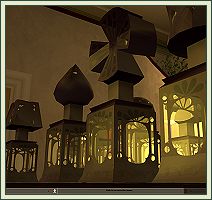
|
 |
|
The generic architecture used for this is shared
by all of our engines and makes 3rd party implementation particularly
painless, as all engines use exactly the same C++ based interface.
This architecture is supported by clear and polished documentation
and a ready-made workbench for testing the engine.
|
||
|
Mindful of the console market, AI Factory is
now also moving into xBox game development.
Many game titles can be found on both the PC and xBox platform.
Further down the line this may be extended to PS/2
as well. With the advent of xBox live, the
future of on-line gaming offers much to the gaming community.
We're all in fine festive mood and everyone
here at AI Factory would like to wish all
of you a very Merry Christmas and a wonderfully
Happy New Year! (How long
did it take us to pose for this photo? Don't ask!) ;-)
Click on the image on the right to see
a full size version...
|
 |
|
|
Demos for 3D Tournament
Chess and Omar Bridge V2 delivered.
These products are for full release in the Spring of 2004. Both
products come with lavish 3D environments and provide a variety
of computer opponents with differing play styles. These products
push out the boundaries of 3D quality, with stunning environments.
|
 |
|
|
Omar Sharif signed an
endorsement contract with AI Factory to promote the coming 3D
Bridge title. Omar Sharif is renowned the world over across
all generations for his many films over the last 40 years, and has
some of the World's greatest films to his name. Omar
Sharif also has another formidable career in his passion for
the game of Bridge, where he is undoubtedly the World's most well-known
Bridge expert. The coming Bridge product will be featuring Omar
in the game.
|
 |
|
|
AI Factory completes two major applications
for Global Star Software, 3D Pool and 3D
Darts. We are currently working on 4 further applications for the
same publisher and already have plans for future follow-on work
in the same area. Already we are making plans for Pool 2. We have
also just completed work for Psion and are
in discussions with two other publishers with new projects in mind.
|
 |
|
|
Contracts signed with the band Meretto
and Hasen Music to create Music and SFX
for our coming titles.
|
||
|
AI Factory signs a contract with Global Star
Software to complete 6 3D Titles, 3D Pool,
3D Darts, 3D Chess,
3D Bridge, 3D Slots
and 3D Casino.
|
||
|
Company established.
|
|
|